




![]()
How TOPdesk bridged the gap between
HubSpot & Salesforce for commercial growth
Case Information
Implementation: HubSpot Marketing Hub
Integrations: HubSpot ↔ Salesforce
Challenge: 11 regions, 11 ways of working. Fragmentation, inconsistent data and little insight into ROI while a transition to Salesforce was underway.
Solution: One central way of working, with standardized processes, clean data and a link between HubSpot and Salesforce.
Result: From 11 to 1 approach, a 360° customer view and a scalable foundation for measurable growth.
Website: topdesk.com
11 → 1
From 11 practices to 1 central approach
360°
customer view across the entire funnel
end-to-end measurability
uniform measurement structure
"Webs helped us not only to set up HubSpot, but more importantly to make the right choices in a complex transition. By looking at processes, data and systems in context, we now have a much stronger basis for centralized control and measurable commercial impact."

Summary
TOPdesk, originally a Dutch SaaS company for service management, was already working with HubSpot for marketing while sales was still working in Dynamics. Due to international growth and an organization with 11 regions, many different ways of working, dashboards and campaigns were created within one central system. This made scalability, consistency and measurability difficult. Webs first helped Topdesk professionalize the marketing engine in HubSpot and now supports the next step: the transition to one central way of working, a cleaner database and a new connection between HubSpot and Salesforce, so that marketing and sales work better together and commercial impact is more measurable.
About TOPdesk
TOPdesk is a SaaS company of Dutch origin that helps organizations organize their internal service processes. Although the Netherlands is still the main market, TOPdesk has grown strongly internationally. That growth also brought with it complexity.
After all, the marketing organization was organized both centrally and regionally. The global direction was set from a central marketing function, while 11 regions did their own commercial implementation and localization. In practice, this led to many different working methods, campaigns and dashboards within one organization.
The challenge
One system, eleven ways of working
Working with Webs began from a marketing automation issue. Although HubSpot was available centrally, each region worked in it largely in its own way. This actually created 11 different processes within the same system. Campaigns were built over and over again, dashboards differed per region, and results were difficult to measure uniformly.
At the same time, there was more. TOPdesk decided to switch from Dynamics to Salesforce for sales.
This created another major change challenge:
How do you ensure that marketing, sales and systems remain well aligned while the business continues to operate?
The solution & approach
First the process, then the tooling
Webs helped TOPdesk not only with the re-implementation of HubSpot, but especially with making the right strategic choices. Together, we first looked at the current situation and at the future process map: what does the commercial process look like today, and what should it look like in a world where HubSpot and Salesforce converge?
The focus was not on individual departments, but on the total commercial process. Not thinking in marketing here and sales there, but in one customer journey from first interaction to sales and customer growth.
From that vision, Webs assisted Topdesk:
-
defining one central way of working
-
Harmonizing processes across regions
-
Cleaning up data
-
Redesigning metrics and reporting
-
bridging the gap between marketing and sales within the new system architecture
Change while the business keeps running
The biggest challenge was that the change had to take place while the commercial engine was already running. Campaigns had to remain live, leads had to keep coming in, and teams had to remain operational.
That's why Webs and TOPdesk took a phased approach. Internally, this was aptly described as: a flying plane whose engine needs to be replaced. First you build the new engine, then let it run, and only then do you remove the old one.
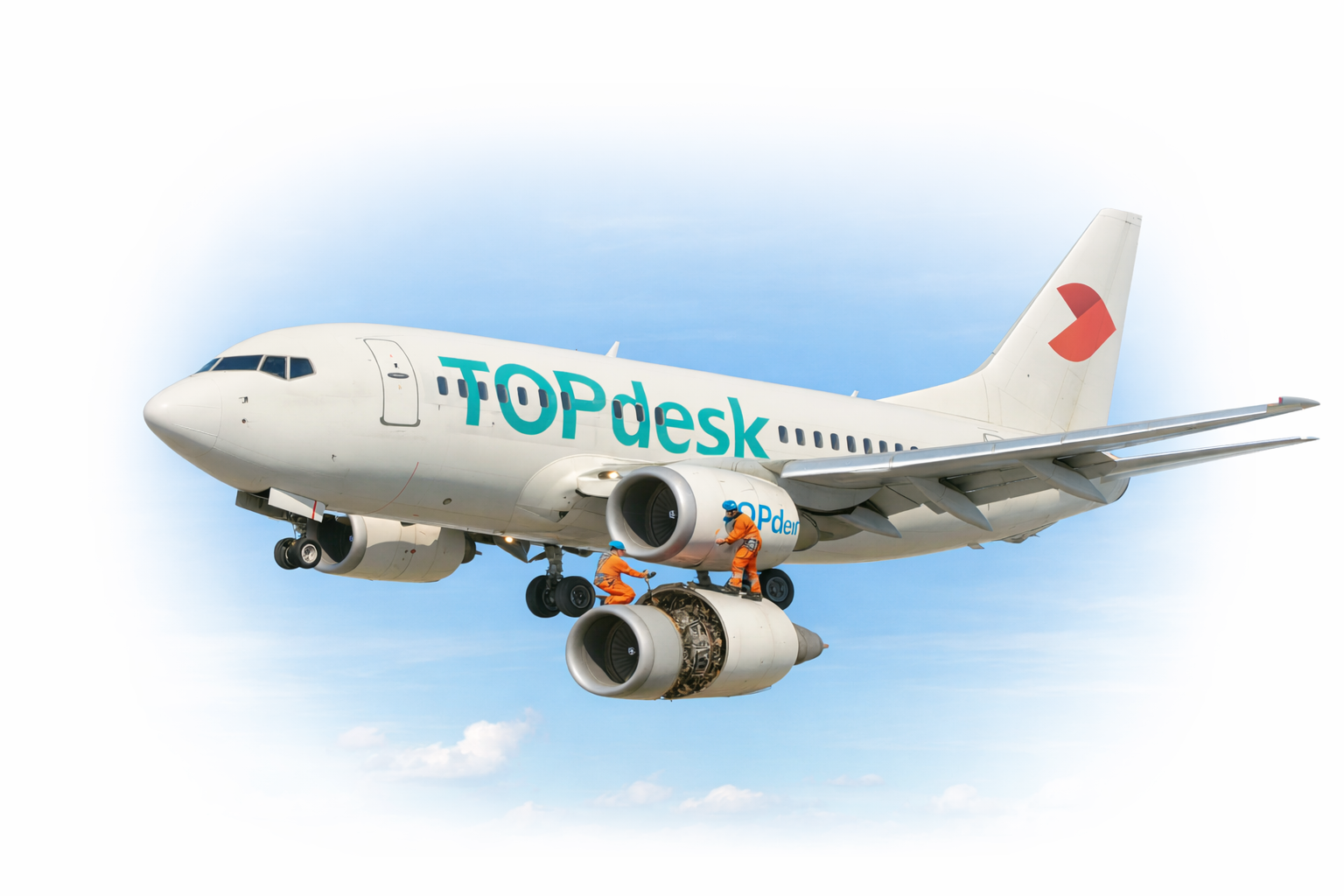
Precisely this approach proved crucial. Based on the shared insight and advice, the first Salesforce implementations were even postponed twice. Not to slow down, but to prevent processes from going live before marketing, data and sales engagements aligned well enough.
The result & the impact
A stronger foundation for commercial strength
Although TOPdesk is still in the middle of the transition, the first results are clearly visible. The organization is moving from a lot of regional variation to one central way of working. Data has been cleaned up, measuring points have been set up more uniformly and the foundation for a 360-degree customer view has been laid.
As a result, it is increasingly possible to measure the impact of marketing on the commercial process, at campaign level, region level and ultimately at revenue level. Cooperation between marketing and sales has also become stronger, in part because the right stakeholders are now involved earlier and more structurally.
For TOPdesk, this means one thing above all: a better commercial engine to match the organization's next growth phase.
Conclusion & key takeaways
The foundation for scalable, international growth
TOPdesk's transition shows that growth not only requires better tooling, but above all better coherence. As long as marketing, sales and service operate as separate entities, scalability remains limited and real grip on commercial performance is difficult to achieve.
By opting for one central way of working, a cleansed database and a strong connection between marketing and sales, TOPdesk has laid a foundation that suits an international organization. No longer 11 variations on the same process, but one clear structure that can be applied locally and remains centrally manageable.
What this case especially underscores is that technology only delivers value when processes and teams are aligned. The combination of a clear strategy, the right order in implementation and a partner who looks beyond just the tool makes the difference between optimizing and truly transforming.
For TOPdesk, this means that the commercial engine is not only running better, but also ready for the next phase of growth. More grip, more insight and ultimately more impact.
HubSpot as enterprise-ready foundation for complex, international organizations
TOPdesk's case shows that HubSpot can also provide a powerful foundation for marketing and commercial management within an enterprise context. In an organization with multiple regions, different ways of working and a complex system architecture, HubSpot offers the opportunity to provide structure and consistency.
Where previously there was fragmentation in processes, campaigns and data, HubSpot makes it possible to work from one central way of working and one shared data model. This not only provides more overview, but especially better collaboration between teams and regions.
Especially when combined with other enterprise systems, such as Salesforce, HubSpot proves its power. As a marketing engine, it fits seamlessly into the broader commercial landscape, while providing flexibility for local execution.
In short, HubSpot has become an enterprise-ready platform that helps organizations reduce complexity, standardize processes and scale commercial impact.

